What 'progressive nonprofit context' means in this course
We're not writing for a generic Fortune 500 setting. The structure, resources, and values of a progressive nonprofit shape what this course expects of you, and what it doesn't.
This course is built for managers and staff at progressive nonprofits with structure and resources: a real HR function, an accommodations process, an ED, a board, a budget for training, and an explicit commitment to equity. Most of the practices here scale up or down (they work in a small organizing shop too) but the assumptions are designed for an org that already has the staff infrastructure to take action.
'Progressive' here is also not decorative. It implies a few things:
- You already accept that workplaces shape outcomes. If you believe that race, gender, class, and immigration status shape who thrives at work, then you already accept the basic premise of anti-deficit framing — you just need to extend it to disability.
- You already have a vocabulary for power. The Management Center's 'Four Elements of Strong Relationships' name 'Power and Difference' as one of the four pillars. Progressive nonprofits use that vocabulary natively. The same skill (naming difference instead of pretending neutrality) is how we talk about neurodiversity at work.
- You already build for sustainability, not just output. Burnout culture is named as a harm in most progressive nonprofit settings. Masking-driven burnout in autistic colleagues is the same harm with a different mechanism.
Two things that progressive nonprofits often don't have, and that this course will help with:
- Specific manager systems for neurodiverse teams. The intent is usually there. The 1:1 cadences, written feedback, expectation docs, and accommodation routines are often not.
- A shared text for the team. Even orgs with serious DEI work often don't have a common reading list on autism. This course is one such text: written so an ED, a program director, and a junior staffer can all use it.
If your org is for-profit, governmental, or smaller and scrappier, you'll still get a lot from this course — but you'll need to translate a few examples to your context. We'll flag those where they appear.
Learner action
List one strength and one gap your org has in extending its equity commitments to neurodiversity. Be specific: name a system, not a vibe.
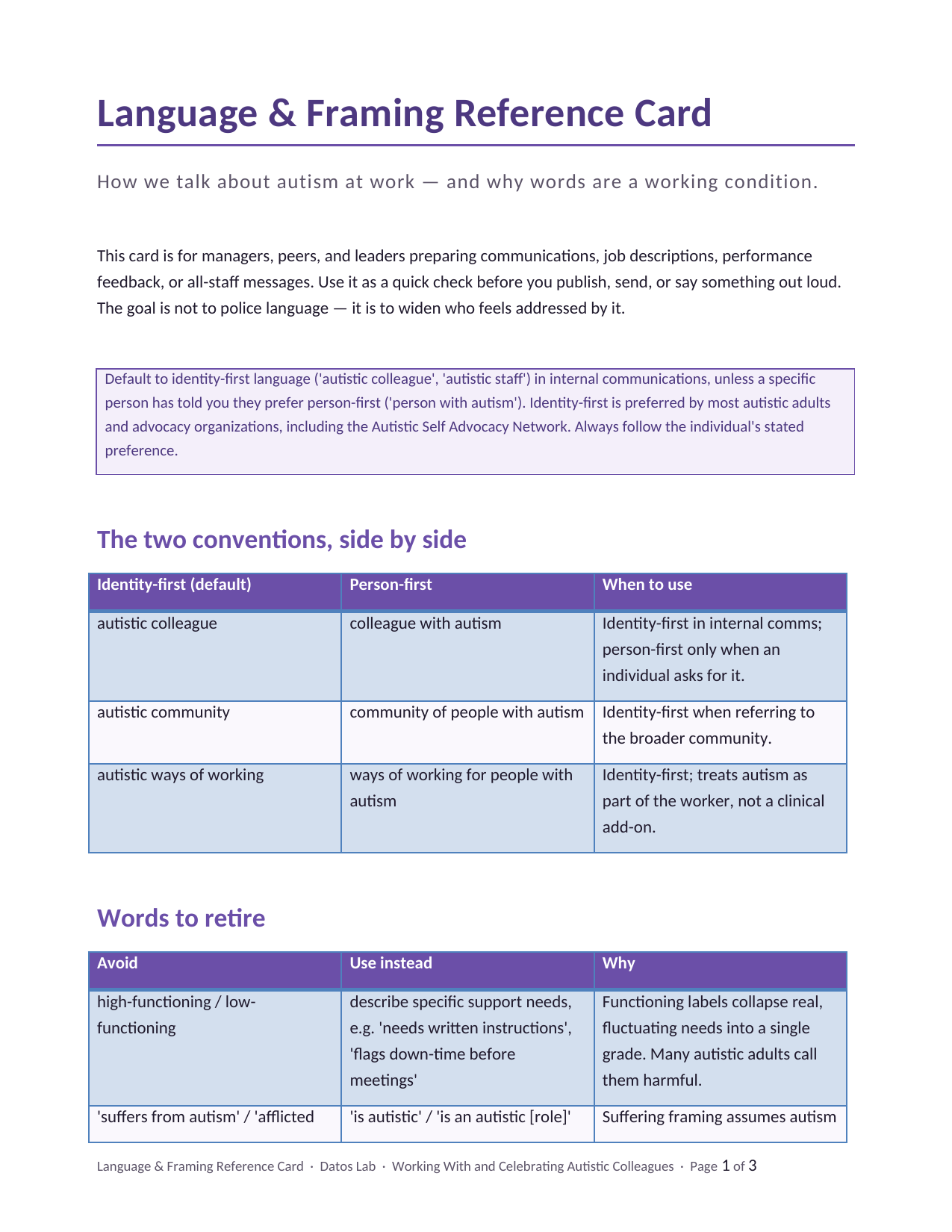
Language & Framing Reference Card
Pocket guide to identity-first language, words to retire, and a pre-send check. Designed to sit beside your job descriptions, your performance feedback drafts, and your all-staff messages.
Action: Complete the learner action above, then slide to continue.