Feedback and accommodations — discipline, not improvisation
Feedback that lands well with autistic reports is the same feedback that lands well with everyone: written, specific, separate from worker, followed by a concrete next step. Accommodations should be routine, not exceptional.
Feedback discipline
Four rules that hold across every reporting relationship on the team:
- Specific. 'This memo' not 'your writing'. 'The third paragraph' not 'the tone'.
- Written before spoken. Draft the feedback in a doc, share it before the conversation, then talk through it. This removes recall-under-pressure and gives the report time to process.
- About the work, not the worker. 'This brief buried the decision' not 'you bury decisions'. Behavior is observable; character is not.
- Concrete next step. 'Lead with the decision; here's an example' not 'try to be clearer'. End every piece of feedback with one action.
One temptation to refuse: tone-coding. 'It came across a bit harsh' is feedback about how something hit you, not about the work. If the work itself crossed a written, shared standard — say that. If your reaction is to a style you find unfamiliar, that's information about you, not the report. Address the work first.
Accommodations
The Heinze (2025) review on workplace accommodations and autistic employment outcomes lands on a simple point: accommodations are routinely beneficial, and the request process itself is the largest source of friction. So:
- Know your org's accommodation request process before you need it. Walk a report through it in their first month, not after a crisis.
- Default to non-disclosure accommodations where possible. Quiet space, cameras-off, written-first, predictable scheduling; these should be available to anyone, without paperwork.
- Document conditions changed, not disclosures received. The report owns their information.
- Re-check accommodations quarterly. The right setup for the role 18 months ago may not be the right setup now.
Learner action
Pick one piece of feedback you owe a report. Draft it in writing using the four rules. Send the draft before your next 1:1 and talk it through.
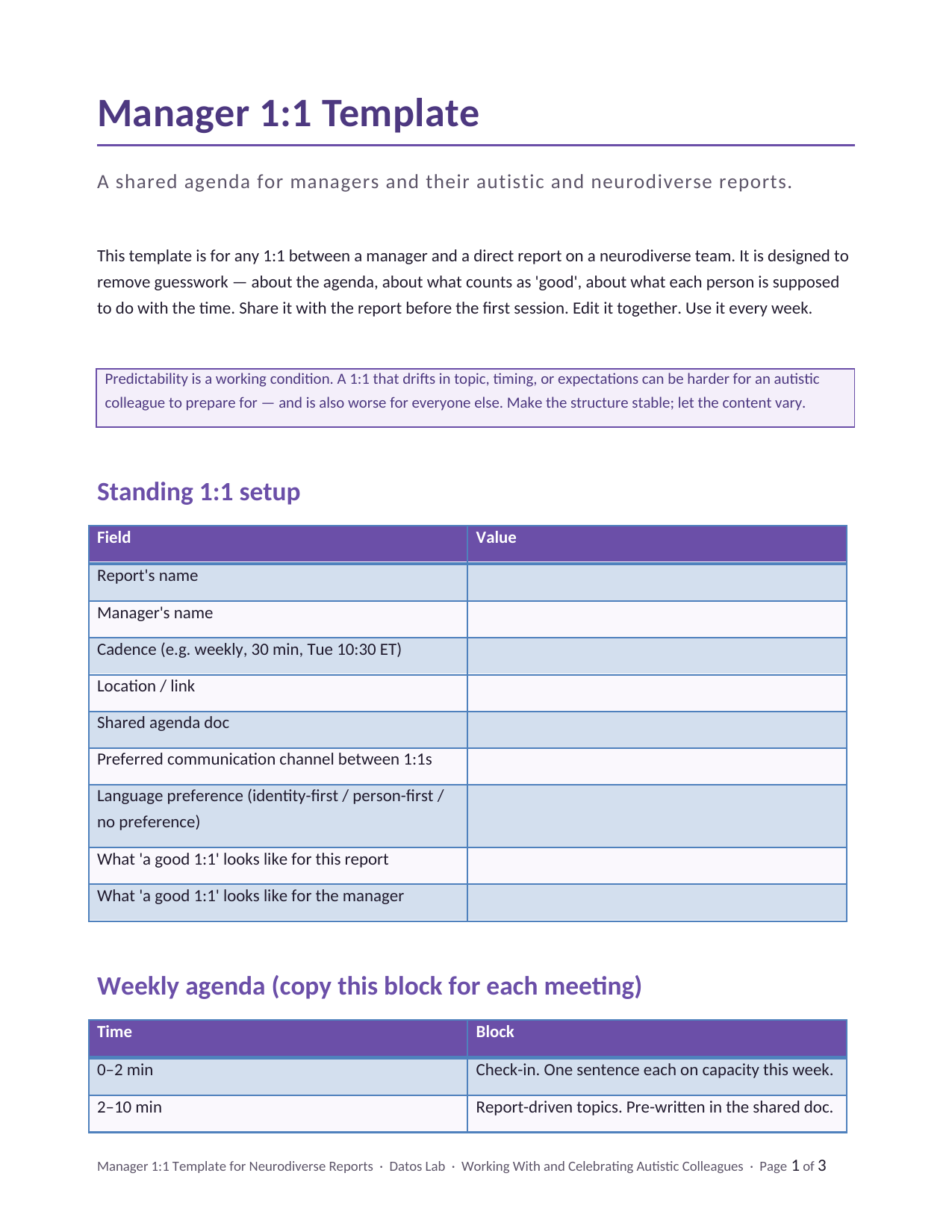
Manager 1:1 Template for Neurodiverse Reports
Standing 1:1 agenda, sustainability-check questions, feedback discipline, and an action log. Share it with your report before the first session and edit together.
Action: Complete the learner action above, then slide to continue.