Writing peer norms: the Module 4 worksheet, used well
Two colleagues (at least one of whom is autistic) fill out a one-page worksheet together at the start of a collaboration. It feels formal. It saves months of friction.
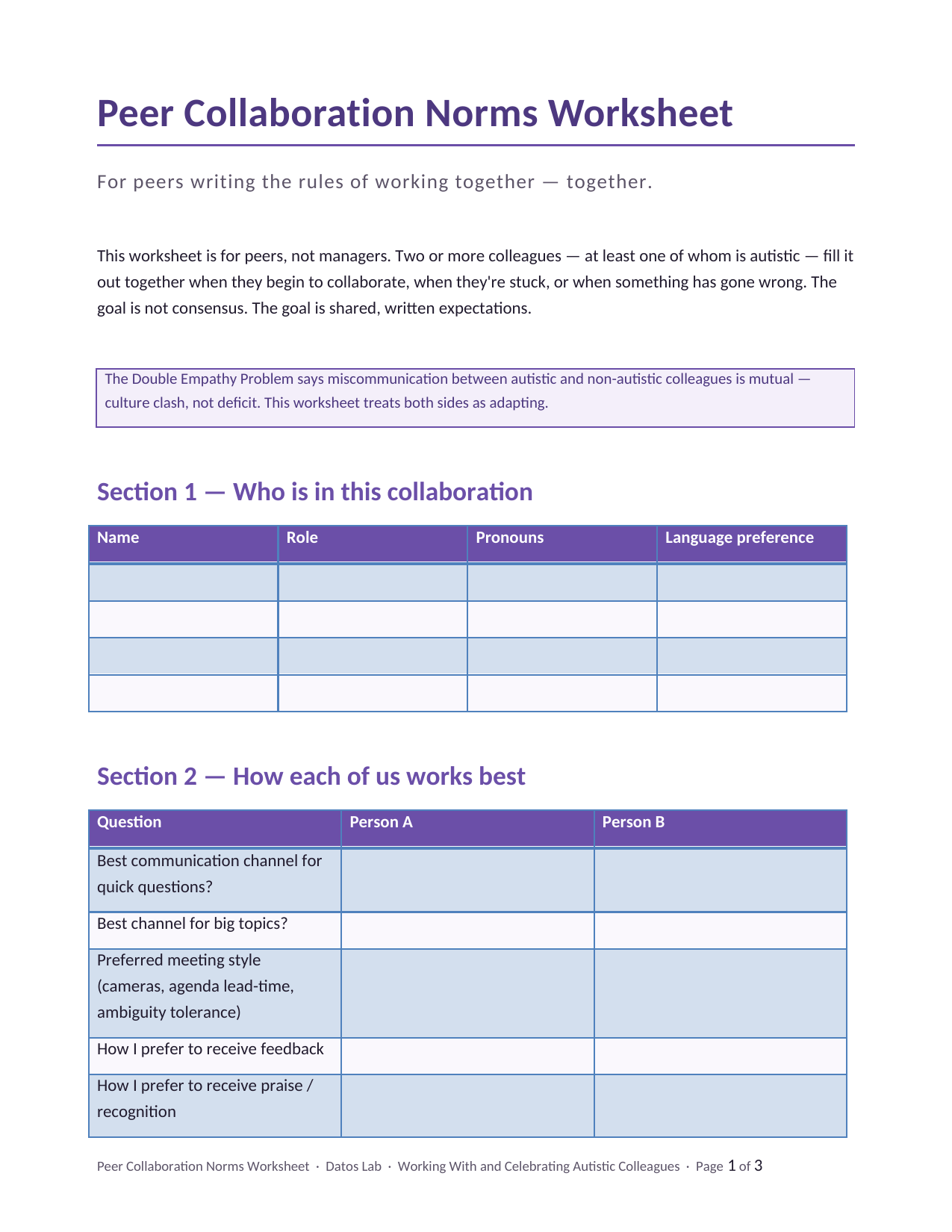
The Module 4 template (the Peer Collaboration Norms Worksheet) is a two-person, one-page document. You fill it out together at the start of a new collaboration: a co-led project, a working group, a new team pairing. It looks formal because it is, and because formality at the start removes guesswork later.
The worksheet has five sections:
- Who is in this collaboration. Names, roles, pronouns, language preferences. Identity-first vs. person-first is established here.
- How each of us works best. Communication channels, meeting style, feedback preferences, sensory needs, capacity signals.
- Shared norms for this collaboration. Written-first defaults. Agenda requirements. Direct questions as curiosity, not aggression. Plain dissent welcome. Silence ≠ consent.
- Friction log. When something feels off, you write it here before reacting. You bring it to a 1:1 or a retro, not to the broader channel.
- Sign-off. You both sign. You can revisit any section any time.
Some pitfalls to avoid:
- Don't make one peer fill out the worksheet alone. The whole point is that both sides are adapting. If only one person is doing the disclosure labor (and on neurodiverse teams that quietly defaults to the autistic peer), you've recreated the deficit framing you're trying to leave behind.
- Don't keep it as a secret between you two. Where appropriate, share key norms with the broader team. 'Project channel: written-first; meetings always have agendas 24h ahead' is a useful norm for everyone.
- Do revisit it. Three months in, look at the friction log together. What's a pattern? What needs to be a written norm now, not just a one-off log entry?
The Management Center's Four Elements of Strong Relationships (Authenticity, Trust, Power and Difference, Shared Purpose) are useful here as a self-check. If the worksheet is making one of you feel performative (Authenticity), unreliable (Trust), or unsafe to name a difference (Power and Difference), the conversation needs to slow down.
Learner action
Identify one peer collaboration you're in. Schedule 30 minutes to fill out the Peer Collaboration Norms Worksheet together. Bring the template.
Peer Collaboration Norms Worksheet
Two-person worksheet for writing how you'll work together, signing it, and logging friction when it shows up. Use it at the start of any new collaboration.
Action: Complete the learner action above, then slide to continue.